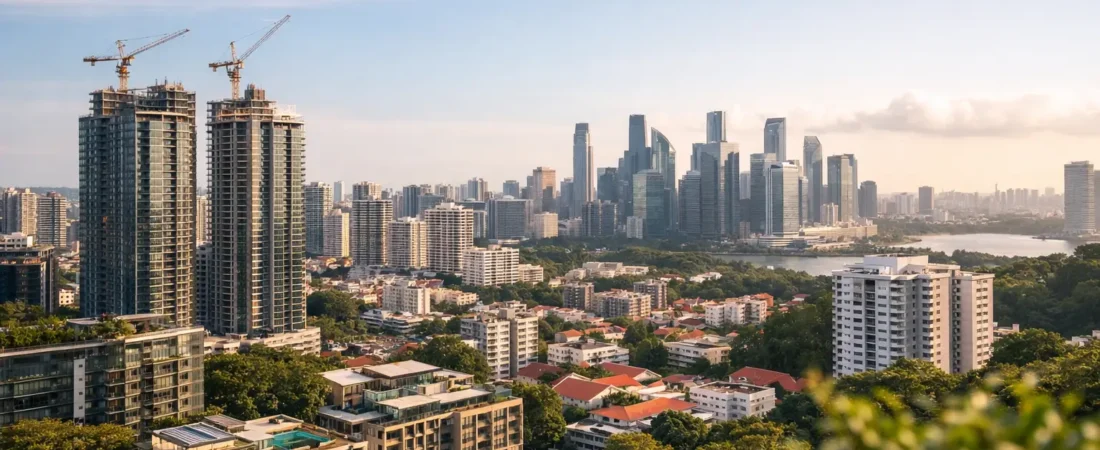
A city fringe address can change the entire calculation for a new launch buyer. It can place daily work, established amenities, and central Singapore within easier reach without requiring a Core Central Region price point. That is why the top city fringe launches 2026 will attract close attention from owner-occupiers and investors alike. The opportunity is real, but so is the need to compare each project beyond its district label.
For buyers tracking the 2026 pipeline, the better question is not simply which development is closest to the city. It is whether the project offers a practical location, a sensible entry price, a unit mix that matches demand, and a timeline that works for the buyer’s own plans.
Why city fringe launches remain closely watched
In Singapore, city fringe typically refers to locations outside the Core Central Region but near enough to benefit from access to central employment areas, established transport connections, and mature neighborhood conveniences. These projects may sit within the Rest of Central Region or in nearby areas where the commute to the CBD, Orchard Road, or one-north remains manageable.
This positioning appeals to several buyer groups. Families may value nearby schools, food options, parks, and a more residential setting than the city center. Professionals may prioritize an efficient rail or driving route to work. Investors often look for areas with a broad tenant pool, particularly where business parks, hospitals, education hubs, or central offices are accessible.
However, city fringe is not a single market segment. A project beside an MRT station in an established neighborhood can perform very differently from one that is technically near the city but has limited walkability, a less direct commute, or fewer immediate amenities. The district matters, but the micro-location matters more.
What defines the top city fringe launches 2026
A strong launch does not need the lowest price or the largest marketing campaign. Buyers should look for a combination of attributes that support both livability and long-term demand.
Transport should be measured by the real journey
An advertised MRT distance is useful, but it is only the first step. Consider the full walk from the development gate to the station entrance, the number of stops to major work nodes, and whether a transfer is required. For drivers, examine likely peak-hour routes rather than off-peak travel times.
A project near one MRT line may still be less convenient than a slightly farther development with access to an interchange or a direct route to the buyer’s workplace. For families, school runs and weekend errands deserve the same attention as the weekday commute.
Existing amenities reduce execution risk
New launches in mature or well-served city fringe areas often have a clearer day-one lifestyle proposition. Buyers can assess actual supermarkets, hawker centers, clinics, shopping options, parks, and transit connections instead of relying entirely on future plans.
That does not mean an emerging precinct should be ruled out. Areas with planned transformation can offer growth potential, but buyers should distinguish confirmed infrastructure from aspirational master-plan narratives. If an amenity is central to the purchase decision, verify its status, delivery timeline, and practical distance from the site.
Supply conditions shape pricing power
A development may be attractive on its own, yet face meaningful competition from nearby launches, recent completions, or a large resale market. When several projects target the same buyer pool within a short period, purchasers have more options and developers may need sharper pricing or stronger unit offerings.
Conversely, limited new supply in a popular location can support interest, particularly when resale choices are older or when buyers place a premium on a new development’s facilities, efficiency, and warranty coverage. Supply is never the only factor, but it helps explain why two nearby projects can receive very different market responses.
How buyers should compare a 2026 launch shortlist
Start with a buyer profile, not a brochure. A couple purchasing their first home, a family replacing a larger resale apartment, and an investor seeking rental demand can all reach different conclusions on the same project.
For owner-occupiers, focus first on daily friction. Is the layout large enough for the intended household over the next five to 10 years? Are bedrooms usable rather than merely marketable? Is there workable storage, a practical kitchen, and sufficient space for remote work if needed? A compact city fringe unit may be appealing at launch, but it can become restrictive quickly if family needs change.
Investors should study the likely tenant base and the rental alternatives available nearby. Proximity to employment centers can support demand, but unit size, furnishing expectations, and competing rental stock will affect results. Gross rental yield should not be viewed in isolation. Maintenance fees, vacancy periods, financing costs, property taxes, and future competing supply can materially change the outcome.
Price comparisons also require discipline. Do not compare only the headline price per square foot. A newer project may have a higher figure because units are smaller, layouts are more efficient, or the development includes facilities that a nearby resale property does not. Compare total purchase price, bedroom count, internal usability, tenure, age, and location quality together.
The trade-offs behind a city fringe premium
City fringe projects often command a premium over suburban alternatives because they save time and offer access to a broader range of amenities. The key is deciding whether that premium is justified for the individual buyer.
A buyer who works in the CBD several days a week may reasonably place a high value on a shorter commute. A household with school-age children may prefer a larger home farther out if it offers more space and an established family routine. An investor may accept a smaller unit in a highly connected location, but only if the purchase price leaves room for sustainable rental demand.
Tenure is another consideration. Freehold developments can attract attention for their longer ownership horizon, while leasehold projects may offer stronger relative value, newer infrastructure, or a more convenient location. Neither is automatically superior. The decision depends on price, intended holding period, resale audience, and the quality of the specific site.
Buyers should also be careful with the phrase “near the city.” A development can be geographically close to central Singapore yet feel disconnected if pedestrian routes are poor, roads are congested, or surrounding amenities are thin. Visit the neighborhood at different times of day whenever possible. The view from a sales gallery and the experience of reaching the station during a rainy evening can be very different.
Questions to ask before booking a unit
Before committing to a ballot or booking decision, buyers should have clear answers on the development’s estimated completion timeline, maintenance fees, unit orientation, nearby construction activity, and the availability of comparable alternatives. Review the floor plan closely, including household shelter placement, air-conditioning ledges, bay windows where applicable, and the usable dimensions of bedrooms and living areas.
It is also worth asking how many units are being released in the initial phase and what types are most likely to be in demand. Early selection can provide more choice, but it should not create pressure to purchase a unit that does not meet the buyer’s needs. A good stack, an appropriate floor, and a practical layout often matter more over time than being among the first to buy.
Financing should be assessed before the launch weekend. Buyers who understand their loan eligibility, cash requirements, stamp duty exposure, and monthly repayment range can evaluate choices with greater confidence. This is particularly relevant for buyers upgrading from an existing property, where sale timing and additional buyer’s stamp duty rules may affect the transaction structure.
Staying ready as the 2026 pipeline develops
Launch information can evolve quickly as developers confirm previews, release pricing guidance, and open unit selections. Keeping a short, well-defined watchlist is more useful than trying to follow every project equally. Track the locations that fit your commute, budget, household size, and preferred tenure, then compare each new announcement against those criteria.
Singapore Property Preview follows new residential activity with the aim of helping buyers move from early awareness to a more informed inquiry. The most suitable city fringe launch may not be the most heavily promoted one. It will be the project whose location, layout, price, and timeline continue to make sense after the launch-weekend excitement has passed.
A measured shortlist gives buyers room to act quickly when the right opportunity appears, without mistaking speed for certainty.